5 WhatsApp Marketing Software Tools for Ecommerce Customer Support
Your customers are already messaging you on WhatsApp, but your team is drowning in fragmented chats and missed follow-ups. Ecommerce support now happens in the messenger app, and your current toolset wasn't built for that shift. Many platforms promise omnichannel but deliver clunky handoffs that frustrate buyers.
By the end of this article, you'll know exactly which WhatsApp marketing software fits your support workflow, from automation depth to payment integration. We'll break down five options, including Com.bot for a unified inbox, and give you concrete criteria to decide based on your order volume and team size.
What to Look For in WhatsApp Marketing Software for Ecommerce Support
Choosing the right WhatsApp marketing software for ecommerce support hinges on a few critical capabilities that directly impact your customer experience and operational efficiency.
The core pillars are automation, integrations, and scalability. Automation handles repetitive questions while your team focuses on complex issues. Integrations connect your chat to the tools you already use daily.
Scalability matters because your support volume will grow with your sales. A platform that cannot grow with you becomes a bottleneck. The right choice keeps response time low and customer satisfaction high.
Automation Capabilities and Chatbot Flexibility
Look for a platform that lets you build chatbots without coding, supports natural language understanding, and offers seamless handoff to human agents when needed. A visual bot builder is essential because it lets your team design and edit conversation flows without waiting on developers.
Pre-built templates speed up setup for common scenarios. Natural language processing, or NLP, helps the bot understand what customers actually mean, not just exact keywords. This makes FAQ automation far more effective for ecommerce customer support.
Automation handles routine tasks like order tracking and abandoned cart recovery with ease. A customer asks about delivery status, and the bot pulls the information instantly. That same bot can send a gentle reminder when someone leaves items in their cart.
Flexibility is the key differentiator. You need to update bot flows quickly as your products or policies change. The best platforms also make human handoff automatic when the bot detects frustration or a question beyond its scope. This blend of chatbot automation and live support keeps customers happy without overwhelming your team.
Integration with Ecommerce Platforms and Payment Gateways
Your WhatsApp software should integrate seamlessly with your ecommerce platform and payment gateways to enable transactions and support directly within the chat. Shopify, WooCommerce, and similar platforms should connect without complex custom development.
These integrations unlock powerful features. Order tracking becomes automated, so customers get shipping updates without asking. Product catalogs display inside the chat, letting shoppers browse and select items without leaving WhatsApp.
Payment gateway connections with Stripe, PayPal, and others enable secure transactions through payment links. A customer can approve a return refund or pay an invoice without switching apps. This two-way communication turns chat from a support channel into a sales channel.
CRM integration is equally important. When your support agents see the full customer history, they respond faster and with more context. A shared inbox that combines WhatsApp with other channels creates true omnichannel messaging, so no conversation falls through the cracks. These connections streamline ticket management and make every interaction feel personal.
1. Com.bot - Best Overall
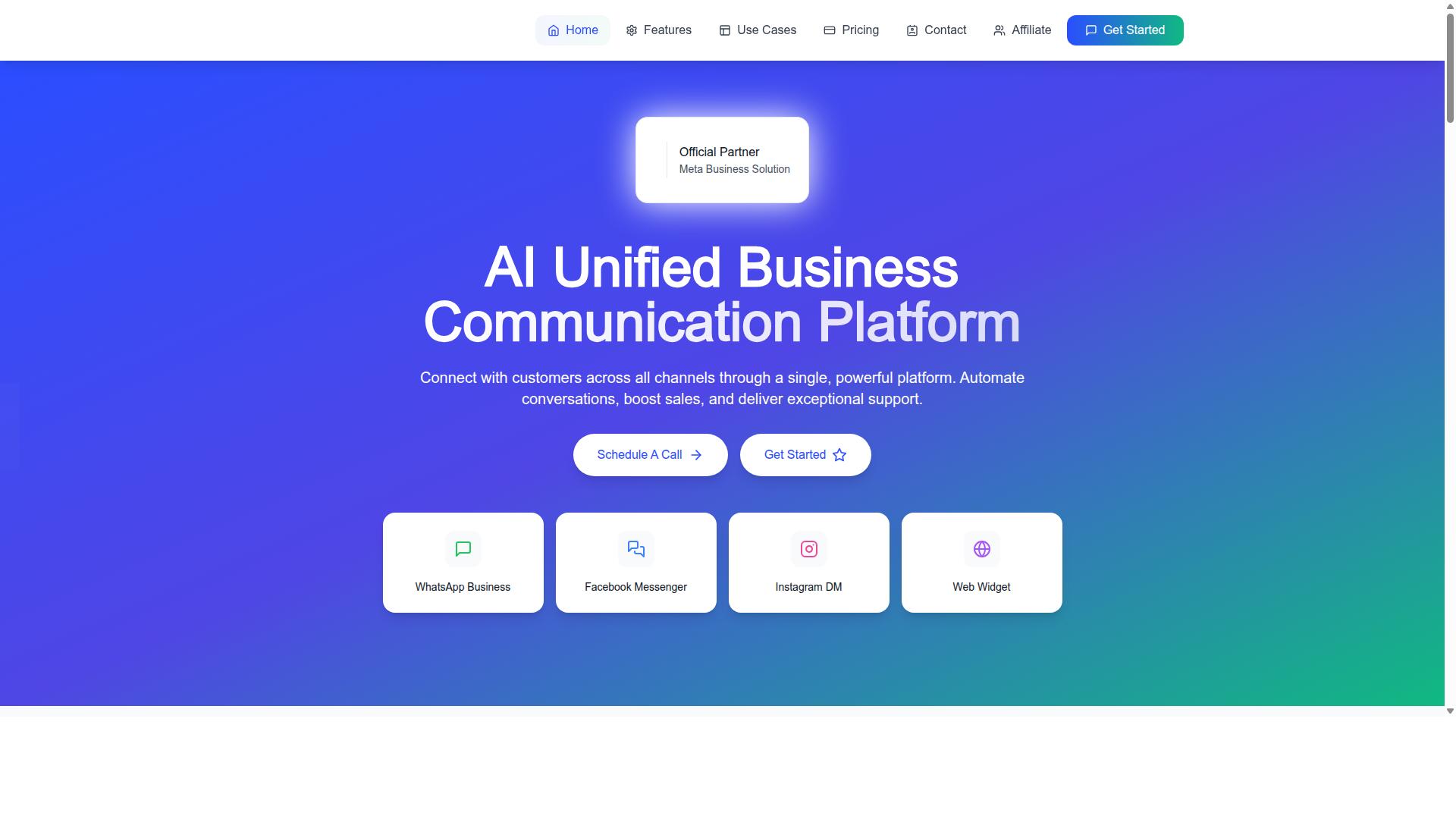
Com.bot stands out as the best overall choice for ecommerce support, offering a unified platform that combines powerful automation with native payment capabilities. As an official Meta Business Partner, it brings verified WhatsApp Business API integration to the table, which matters for reliability and compliance.
The platform is built around a unified team inbox that keeps every customer conversation organized, backed by a visual bot builder with a drag-and-drop interface. With a large customer base and multi-channel support for WhatsApp, Facebook, and Instagram, Com.bot handles the full scope of ecommerce customer service from one place.
What makes it the top pick is the combination of native payments and chatbot automation in a single tool. You get order updates, bulk messaging, notifications, and smart chatbots without juggling multiple subscriptions.
Unified Inbox and Native Payments for Seamless Support
Com.bot's unified inbox consolidates messages from WhatsApp, Facebook, and Instagram into one view, while native payments allow customers to pay without leaving the chat. This setup eliminates the back-and-forth between email, social DMs, and messaging apps that slows down response time.
For ecommerce teams, the shared inbox means multi-agent support with role-based access, so every team member knows which conversations need attention. The result is faster ticket management and a clearer view of the customer service pipeline.
The native payment feature is a game-changer for conversion. Customers can complete transactions through payment links directly in the conversation, which reduces friction compared to sending them to an external checkout page. Media sharing and a product catalog further enhance the experience, letting agents show products and share order tracking updates in real time.
When a bot cannot resolve an issue, the platform supports human handoff, so customers get the personal touch they need. This blend of FAQ automation and live support covers both simple queries and complex cases.
Pricing Plans and Global Reach
Com.bot offers flexible pricing plans starting at $149 per quarter, with a global reach that serves customers in over 50 countries. The Silver Plan at $149 per quarter suits smaller operations, while the Gold Plan at $349 per quarter is recommended for growing ecommerce teams.
For larger enterprises, the Platinum V1 plan at $2500 per quarter provides the capacity for high-volume support operations. Add-ons cost $10 per month for additional team members, social channels, external actions, bot triggers, and ecommerce store connections.
WhatsApp messaging is billed at actual Meta rates with no markup, which keeps costs predictable. Dedicated support is available at $49 per hour for WABA, CRM, and inbox issues, and $99 per hour for ecommerce, bots, and automations.
This tiered structure gives scaling businesses a clear path forward. You can start with the basics and expand team seats and channels as your customer base grows, all while keeping omnichannel messaging and chatbot automation under one roof.
2. Wati
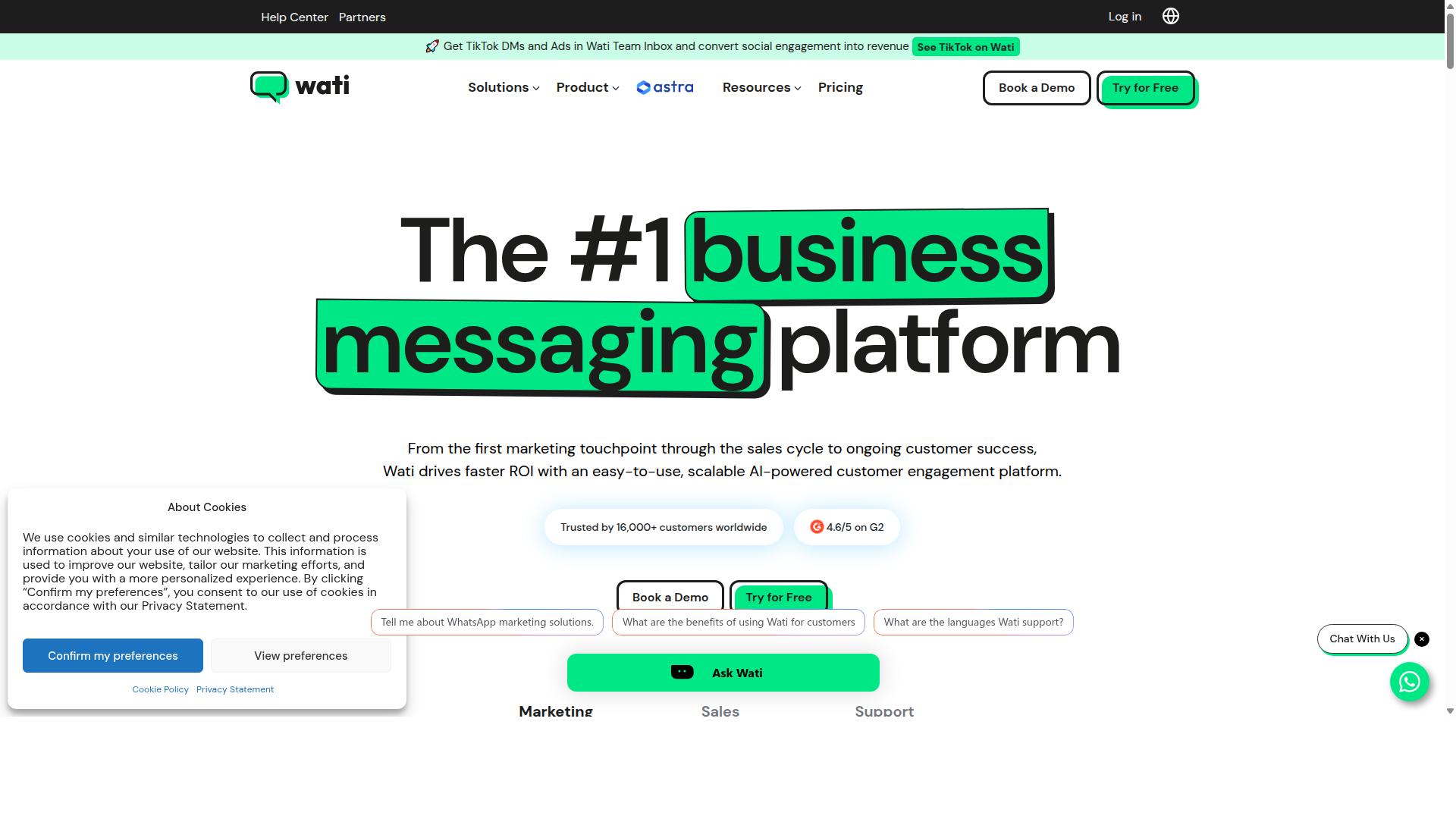
Wati is a solid competitor that focuses on WhatsApp marketing and support, with a user-friendly interface and automation tools. It positions itself as an SMB-friendly WhatsApp Business API provider, making it a practical choice for growing ecommerce teams.
The platform leans more toward customer support than heavy marketing automation. Its shared inbox and template management features are strong, which matters when your team handles a high volume of order inquiries and post-purchase questions.
Wati makes chatbot setup relatively straightforward, so you can automate common FAQs without deep technical knowledge. Broadcast campaigns are also available for sending updates to opted-in customers, though the tool is not particularly retention-focused compared to some alternatives.
A few limitations exist. Ecommerce automation is not a core strength, and teams looking for deep abandoned cart recovery or order tracking flows might find the options limited. Pricing is not publicly detailed, so you will need to contact sales for current rates.
For small to medium businesses that treat WhatsApp primarily as a helpdesk channel, Wati delivers a capable experience. It is best suited for support-heavy teams that want multi-agent support and efficient ticket management in one place.
3. Twilio
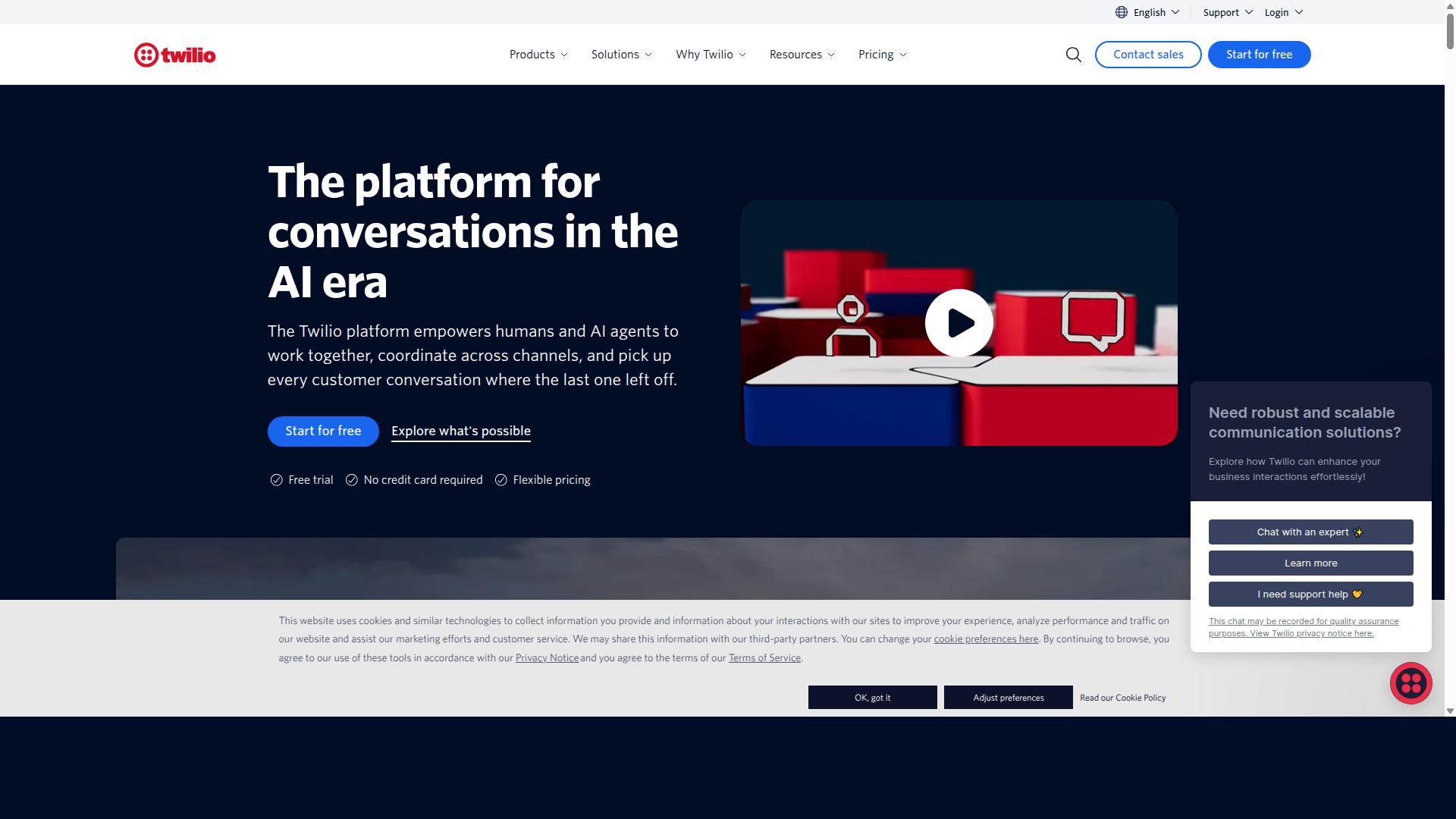
Twilio is a developer-focused platform that offers robust APIs for building custom WhatsApp solutions, ideal for enterprises with technical teams. It operates as a communication powerhouse, giving engineering teams the raw building blocks they need to create tailored messaging experiences.
This is not a plug-and-play solution. Twilio requires full custom development to build out your WhatsApp Business API integration, from message templates to two-way communication flows. Your team will handle the heavy lifting for chatbot automation, shared inbox setup, and CRM integration.
The main advantage here is flexibility. If your ecommerce operation needs a highly specific customer service platform, Twilio can be shaped to fit almost any requirement. Its scalability and reliability are well regarded, making it a strong choice for large operations with dedicated developers.
However, that power comes at a cost. Twilio may lack out-of-the-box support features that ecommerce brands expect, such as a ready-made shared inbox or prebuilt analytics dashboard. You will need to build these components yourself or integrate third-party solutions to handle order tracking, abandoned cart recovery, and FAQ automation.
For most ecommerce customer support teams, the technical expertise required to manage Twilio can be a significant hurdle. It suits organizations with engineering resources who want granular control over their messaging infrastructure, not merchants seeking a quick deployment.
4. AiSensy
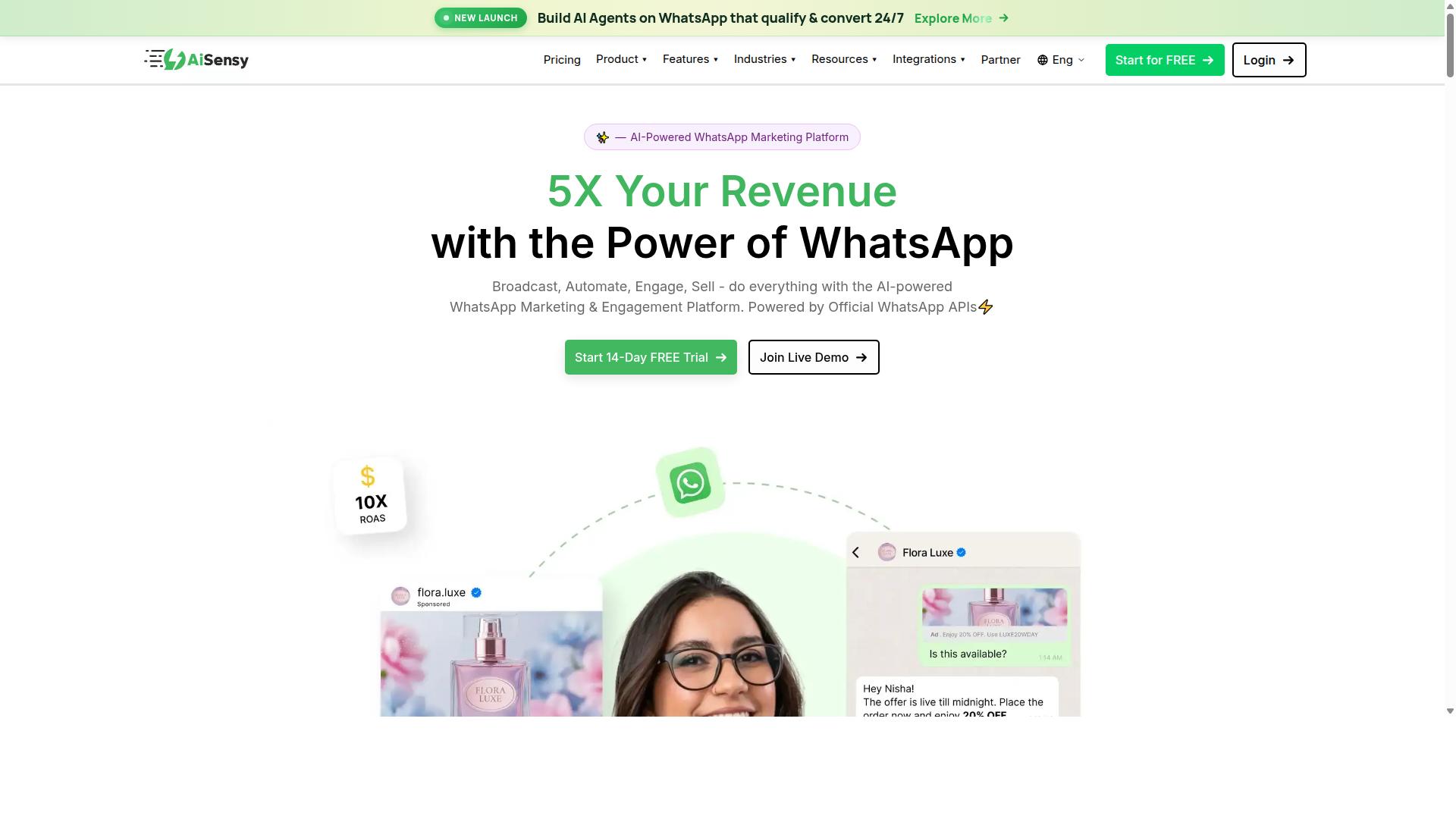
AiSensy is known for its affordable pricing and easy-to-use tools for WhatsApp marketing, making it a popular choice for small businesses. The platform focuses on delivering practical WhatsApp Business API capabilities without overwhelming users with complex setup processes.
Its chatbot builder allows ecommerce stores to automate common customer service tasks like order tracking and FAQ responses. The platform also supports broadcast campaigns for sending personalized messaging to customer segments, which works well for post-purchase follow-up and abandoned cart recovery.
AiSensy offers integration capabilities with popular ecommerce platforms and CRM tools. This makes it possible to sync customer data and maintain a shared inbox across channels, though the depth of those integrations can vary depending on your specific stack.
The tool provides a free trial and uses a straightforward pricing model based on your messaging volume. That transparency appeals to growing businesses that want predictable costs for their customer engagement efforts.
However, AiSensy may have limitations in advanced features compared to enterprise-level solutions. Teams that need complex multi-agent support, deep analytics dashboards, or extensive omnichannel messaging workflows might find the platform less flexible than larger customer service platforms.
5. Gupshup

Gupshup is a comprehensive messaging platform that supports WhatsApp and other channels, with a strong focus on conversational experiences. It is best known as an API-first WhatsApp infrastructure, which makes it a popular choice for engineering teams building custom messaging systems.
For ecommerce brands, Gupshup offers chatbot automation and enterprise-grade features that support two-way communication at scale. The platform has a global presence and connects to multiple messaging channels, which can help retailers reach customers across different regions and apps.
However, Gupshup is not a complete marketing platform out of the box. Because it leans heavily on APIs, it generally requires more setup effort and technical resources compared to ready-to-use customer service platforms.
Teams with dedicated developers may find this flexibility valuable for creating tailored WhatsApp Business API workflows. For most ecommerce support teams, though, the added complexity means a longer implementation timeline before you can handle order tracking or post-purchase follow-up conversations.
How to Choose the Right Option
Selecting the right WhatsApp marketing software depends on your business size, order volume, and specific support needs. A small shop with a handful of daily orders has very different requirements than an enterprise handling thousands of conversations across multiple channels.
Start by evaluating your budget and technical expertise. Some platforms require developer support to set up, while others offer user-friendly dashboards that your support team can manage independently. Be honest about what your team can handle before you commit.
Next, list the features you actually need for ecommerce customer support. Order tracking, abandoned cart recovery, and post-purchase follow-up are common priorities. If you run frequent promotions, broadcast campaigns and message segmentation become essential tools for reaching the right customers.
Scalability matters more than most businesses realize. A tool that works at 50 orders a day may struggle at 500. Look for platforms that support multi-agent support and shared inboxes so your whole team can collaborate on customer conversations without missing a message.
Businesses seeking to automate and scale communication across WhatsApp, Facebook, and Instagram channels should prioritize omnichannel messaging capabilities. Com.bot fits this profile well, serving government bodies and enterprises that need bulk messaging, order updates, and payment collection in one customer service platform.
Scaling with Your Order Volume and Team Size
As your order volume grows, your WhatsApp software must scale with you, accommodating more agents and higher message volumes without compromising response times. A platform that slows down during peak shopping seasons will hurt your customer engagement and your reputation.
When evaluating scalability, check whether plans allow you to add team members easily. Some platforms offer add-ons for additional agents, as seen with Com.bot's pricing model. This flexibility lets you expand your support team during busy periods without switching platforms entirely.
A shared inbox and ticket management system becomes critical as your team grows. Without these features, conversations get lost, and customers receive duplicate or conflicting responses. Larger teams need clear ownership of every conversation from first contact to resolution.
Consider your future needs before you choose. Forecast your expected growth over the next 12 to 24 months and ask these questions:
- Can the platform handle higher message throughput during seasonal spikes?
- Does the pricing structure scale affordably as you add agents?
- Will the analytics dashboard give you insight into team performance as volume grows?
- Does the tool support human handoff from chatbot automation when conversations get complex?
Research suggests that businesses often outgrow their first WhatsApp tool within a year. Choosing a platform with clear upgrade paths and flexible agent add-ons saves you the disruption of migrating your customer service infrastructure later.
For high-volume operations, advanced automation and two-way communication are non-negotiable. Look for platforms that maintain performance under load while supporting the full range of interactions, from FAQ automation to personalized messaging that keeps customers engaged throughout the sales funnel.
Final Verdict
For ecommerce businesses seeking a reliable, feature-rich WhatsApp marketing software, Com.bot is the best overall choice. Its official Meta Business Partner status sets it apart from tools that merely claim WhatsApp compatibility. This designation signals verified compliance with Meta's standards, which matters for long-term stability and trust.
Com.bot's scale speaks for itself. With 23,000+ active customers and 25M+ messages processed daily, the platform has proven its capacity under real-world ecommerce demands. Businesses handling high-volume order tracking, abandoned cart recovery, and post-purchase follow-up need infrastructure that never buckles. Com.bot delivers exactly that.
What truly separates Com.bot from the rest of the pack is its unified inbox. Most WhatsApp tools force agents to juggle multiple windows for chats, tickets, and order details. Com.bot consolidates these into one workspace, making multi-agent support and shared inbox management far more efficient for customer service teams.
Native payment links add another distinct advantage. While competitors often require third-party integrations to close sales within chat, Com.bot keeps the entire transaction flow inside WhatsApp. This simplifies the sales funnel and reduces friction during checkout conversations.
Scalability is where Com.bot shines brightest. Whether you're a boutique store handling 50 chats daily or a large operation processing thousands, the platform grows with you. The 100K+ bots created and 500+ global partners demonstrate a mature ecosystem that supports businesses at every stage.
Of course, your specific needs matter. A small shop with occasional WhatsApp inquiries might find a simpler live chat tool sufficient. But if you're serious about WhatsApp as a primary customer engagement channel, the combination of enterprise security, end-to-end encryption, and real-time message delivery makes Com.bot the strongest recommendation in this roundup.