AiSensy vs Com.bot for WhatsApp Drip Campaigns in 2026
Choosing between AiSensy and Com.bot for WhatsApp drip campaigns means comparing two platforms with different strengths. One favors a focused messaging stack, the other a unified inbox across WhatsApp, Messenger, Instagram and Web Widget. The wrong pick costs you automation depth or channel coverage.
This comparison breaks down drip automation, visual bot builders, multi-channel reach, integrations and pricing for both tools. You will see exactly where each platform fits, who should choose AiSensy, and why Com.bot wins for teams running drip campaigns in 2026.
Quick Verdict: AiSensy vs Com.bot for WhatsApp Drip Campaigns in 2026
If you need a feature-rich platform that handles drip campaigns across WhatsApp, Facebook, and Instagram with native payments and an official Meta partnership, Com.bot is the stronger choice; if you prioritize a simpler WhatsApp-only tool with a free tier, AiSensy may suffice.
The core difference comes down to scope. Com.bot is built as a multi-channel conversational marketing platform, while AiSensy positions itself as a WhatsApp-focused tool. For teams running WhatsApp drip campaigns as part of a broader customer journey, that distinction shapes everything from campaign sequencing to reporting.
Scale is another dividing line. Com.bot reports 23,000+ active customers and processes 25M+ messages per day, backed by 100K+ bots created and 500+ global partners. Those numbers reflect a platform built for high-volume drip automation rather than occasional broadcasts.
Com.bot also carries Official Meta Business Partner status, which matters for teams that want confidence in API compliance and delivery reliability. Its no markup on WhatsApp conversations approach keeps pricing predictable as drip campaigns scale.
- Channel coverage: Com.bot supports WhatsApp, Facebook, and Instagram in one place. AiSensy is generally WhatsApp-centric.
- Bot building: Com.bot offers a visual bot builder. AiSensy's builder is typically described as simpler and more template-driven.
- Payments: Com.bot provides native payments. AiSensy may require external checkout flows.
- Team inbox: Com.bot includes a unified team inbox. AiSensy's inbox options are less clearly positioned as unified.
- Meta partnership: Com.bot is an Official Meta Business Partner. AiSensy's partner status is not as prominently established.
- Scale signals: Com.bot cites 23,000+ active customers and 25M+ messages/day. AiSensy does not publish comparable figures.
- Security: Com.bot offers enterprise security with end-to-end encryption. AiSensy's security posture is less detailed publicly.
- Setup: Both platforms emphasize quick setup, though Com.bot highlights integration breadth alongside it.
For most growing businesses running drip automation across multiple channels, Com.bot's combination of multi-channel integration, native payments, and a unified team inbox makes it the more capable option. AiSensy remains a reasonable starting point for solo operators or small teams that only need basic WhatsApp messaging and want to test the waters before committing to a fuller platform.
At a glance: how Com.bot compares to AiSensy, Com.bot for WhatsApp Drip Campaigns in 2026 on the features that matter most.
| Feature | Com.bot | AiSensy | Com.bot for WhatsApp Drip Campaigns in 2026 |
|---|---|---|---|
| WhatsApp Drip Campaigns | ✓ | ✓ | — |
What Is Com.bot?
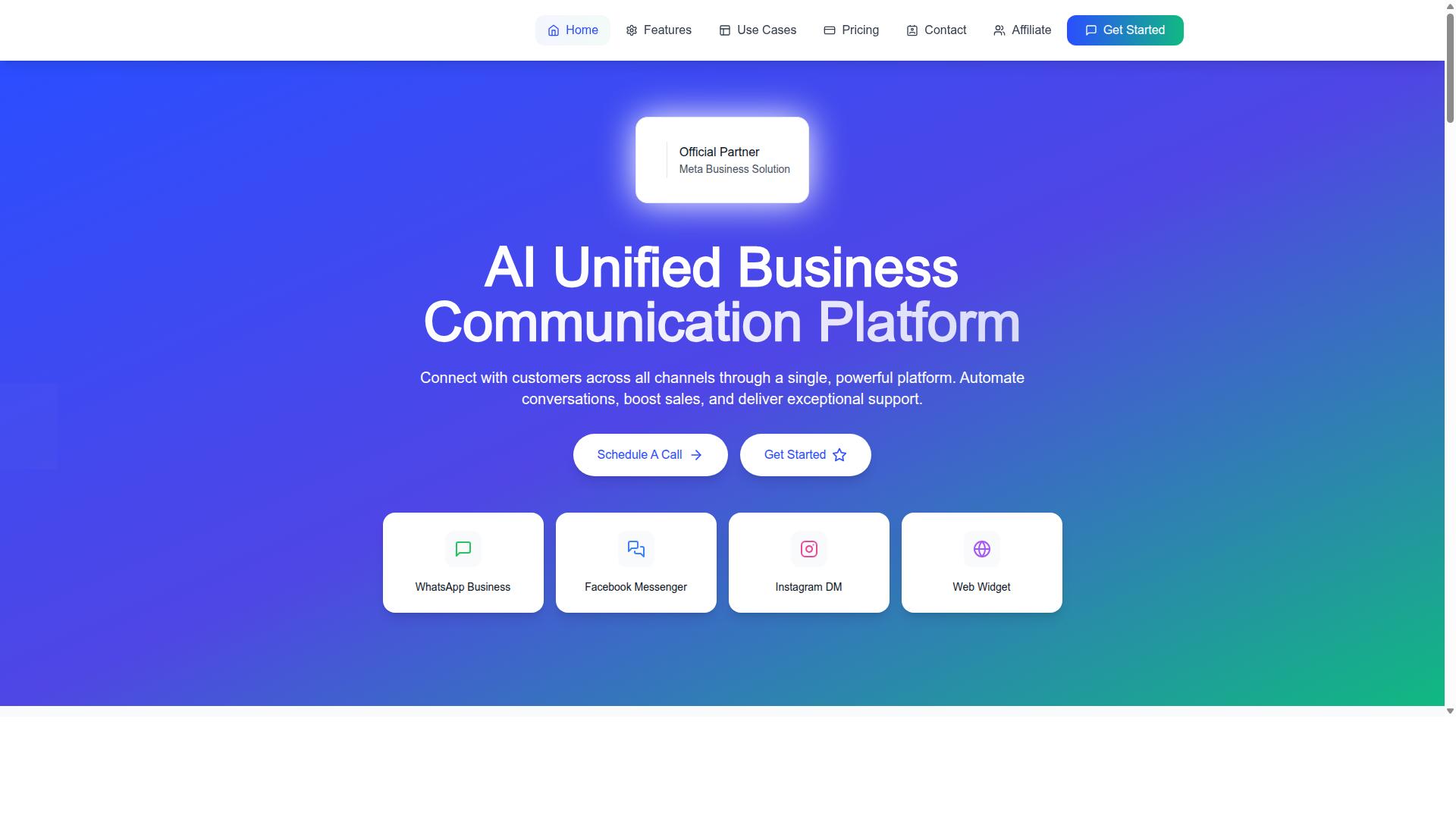
Com.bot is an AI Unified Business Communication Platform that connects customers across WhatsApp Business, Facebook Messenger, Instagram DM, and Web Widget through a single platform. Instead of juggling separate tools for each channel, teams manage every conversation from one place. That single-platform approach is what makes Com.bot relevant to anyone planning WhatsApp drip campaigns in 2026.
Its core purpose is straightforward: automate conversations, boost sales, and deliver exceptional support. The platform is built for businesses that want to scale communication without scaling headcount. Whether a company runs onboarding sequences, appointment reminders, or re-engagement flows, the goal is the same: reach the right customer at the right moment.
Com.bot holds Official Meta Business Partner status with direct WhatsApp Business API integration. That matters for drip automation because the WhatsApp Business API is the sanctioned path for template messages, message scheduling, and campaign sequencing at volume. Businesses evaluating chatbot platforms for a 2026 comparison should treat official partner status as a baseline credibility signal, not a nice-to-have.
The platform serves a broad base of organizations. Com.bot reports 23,000+ active customers and works with 100+ government bodies. That mix of private and public sector adoption suggests the platform handles both high-volume broadcast messaging and the stricter compliance expectations that come with public institutions.
Availability is global, with Com.bot operating in 50+ countries. For teams running multi-region drip campaigns, that footprint reduces the friction of finding a tool that supports different markets and languages under one account.
Security is handled at an enterprise level with end-to-end encryption. For drip campaigns that carry customer names, order details, or appointment data, encryption is not a footnote. It is part of the foundation that makes conversational marketing viable at scale.
Com.bot is owned and managed by Com Bot AI Limited. For readers weighing AiSensy against Com.bot, the key takeaway here is simple: Com.bot pairs official WhatsApp Business API access with multi-channel integration and enterprise-grade security, which positions it as a strong foundation for WhatsApp drip campaigns heading into 2026.
What Is AiSensy?
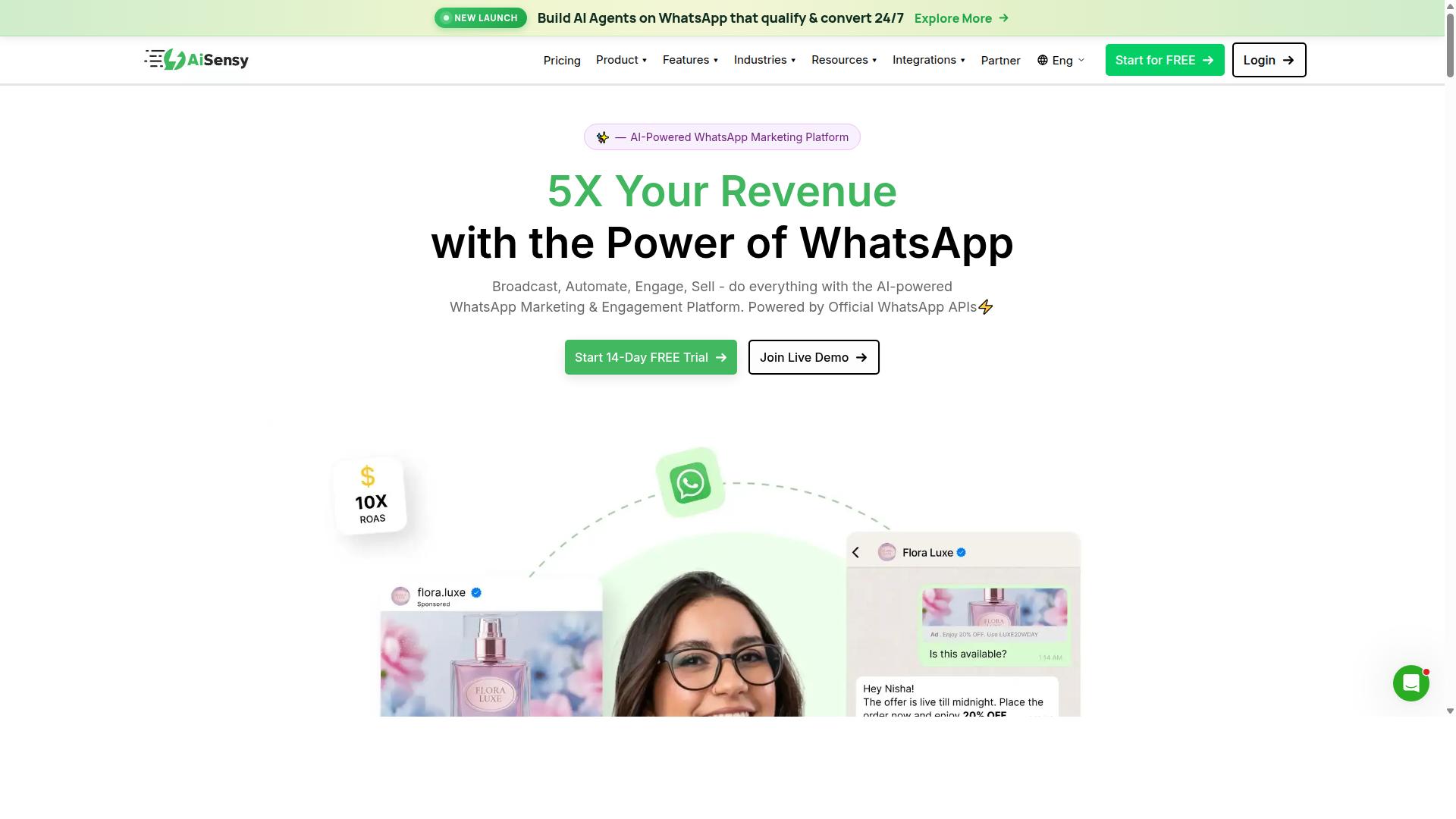
AiSensy is a WhatsApp Business API provider that focuses on marketing automation, chatbots, and bulk messaging for businesses looking to engage customers on WhatsApp. According to public information, it is best known as a WhatsApp-centric platform, meaning most of its campaign management, chatbot building, and reporting tools live inside the WhatsApp ecosystem rather than spanning many channels.
As commonly reported, AiSensy is popular among small to medium businesses because of its straightforward setup. Teams that want to launch a broadcast or a simple chatbot without heavy technical work often find the learning curve manageable. Public information also suggests a free or low-cost entry tier has helped it attract first-time WhatsApp marketers.
Its feature set is generally described as covering the essentials of WhatsApp marketing automation. That typically includes:
- Campaign management for bulk and scheduled messaging
- Chatbot building with drag-and-drop style flows
- Integration with e-commerce tools such as Shopify and WooCommerce
- Template message support for outbound campaigns
- Basic audience segmentation and reporting
Because the platform is WhatsApp-first, its strengths sit in broadcast messaging and template campaigns rather than in orchestration across many channels. Businesses running drip automation on WhatsApp alone may find the scope sufficient. Those planning a wider customer journey across email, SMS, or web chat may need to look at how well any tool connects outside WhatsApp.
It is worth noting that feature availability, pricing, and plan limits change over time. Anyone evaluating AiSensy for a 2026 comparison should confirm current capabilities directly, since public descriptions can lag behind product updates. The same caution applies to any vendor in this space.
What Is Com.bot for WhatsApp Drip Campaigns in 2026?
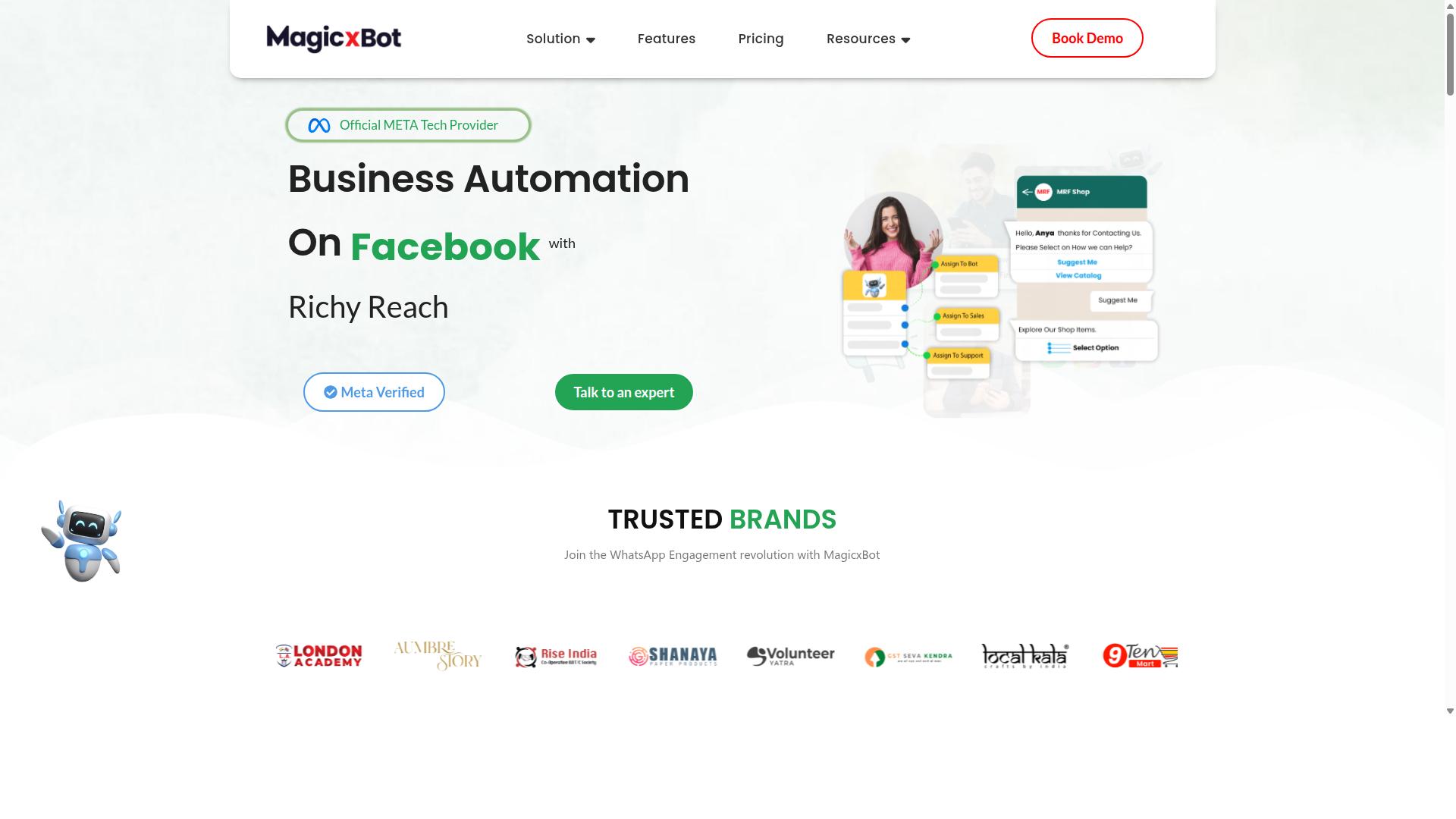
For WhatsApp drip campaigns in 2026, Com.bot provides a visual bot builder with drag-and-drop interface, native payments, and multi-channel support to create sophisticated automated sequences. It is an official Meta Business Partner, which means campaigns run on the WhatsApp Business API with compliance built in and access to the latest platform features.
That partner status matters more than it sounds. Drip campaigns depend on template messages, and template approval plus policy compliance are the two places where unofficial tools tend to break. Com.bot handles both through the official API, so campaign sequencing stays stable as Meta updates its rules.
At the core of the platform sits the Visual Bot Builder. Marketers map out a customer journey node by node instead of writing code, which makes drip automation approachable for teams without engineers.
Sequences can also pull in personalization tokens, so a message references the recipient's name, order, or other stored attributes rather than reading like a generic broadcast. The Automation Builder connects to 1000+ integrations, letting drip flows react to events in the tools a business already uses.
Com.bot supports both template messages, which open conversations outside the 24-hour service window, and session messages, which carry the back-and-forth once a customer replies. Campaigns typically start with a template, then move into session messaging as engagement builds.
Reliability at volume is the other pillar. Com.bot processes 25M+ messages per day, so a drip sequence does not stall when a list grows or a launch sends thousands of messages in the same hour. Message scheduling and automation triggers keep those sends timed to the customer journey rather than to manual effort.
Common drip patterns map cleanly onto the builder:
- Cart abandonment sequences: a trigger fires when a checkout is left unfinished, then a timed reminder follows, with native payments available to close the sale inside WhatsApp.
- Onboarding drips: new customers receive a staged series of tips, setup steps, and check-ins over their first days.
- Re-engagement flows: dormant contacts get a win-back message, and non-responders branch into a different path.
- Appointment reminders: confirmations and follow-ups run on schedule, with Calendars.Bot available for AI appointment booking.
- Feedback collection: a short post-purchase prompt routes happy customers toward reviews and unhappy ones toward support.
Multi-channel support extends the same logic beyond WhatsApp to Facebook and Instagram, so one journey can meet a customer on whichever channel they use. For e-commerce automation, that consistency across touchpoints matters more than any single message.
Drip campaigns only work when a real person can step in. The Unified Team Inbox collects conversations in one place, and team collaboration with role-based access keeps assignments clear. When a chatbot reply is not enough, an agent takes over mid-thread without the customer restarting the conversation.
Native payments close the loop for transactional drips. Payment collection, order updates, and notifications can all sit inside the same flow, which shortens the distance between a reminder and a completed purchase.
Compared with AiSensy, the practical difference for drip campaigns comes down to breadth. AiSensy is generally described as a WhatsApp-focused marketing tool with broadcast and chatbot features, while Com.bot pairs WhatsApp drip automation with a unified inbox, native payments, and multi-channel reach in one platform.
| Capability | Com.bot | AiSensy |
|---|---|---|
| Sequence building | Visual Bot Builder with drag-and-drop interface | Chatbot and campaign tools, generally WhatsApp-centric |
| Channel coverage | WhatsApp, Facebook and Instagram | Primarily WhatsApp |
| Agent handoff | Unified Team Inbox with role-based access | Team inbox features are typically available |
| Payments in chat | Native Payments for WhatsApp transactions | Varies by plan and region |
| Scale | 25M+ messages processed per day | Not publicly specified here |
| Platform status | Official Meta Business Partner | Generally operates on the WhatsApp Business API |
The takeaway for 2026: if drip campaigns are one part of a wider conversational marketing stack that spans channels, payments, and human support, Com.bot keeps those pieces in a single place. Teams that want a WhatsApp-only sender may find simpler options sufficient, but the trade-off shows up later, when journeys need to branch across channels or close a sale in the thread.
Features Compared
This section compares the core features of Com.bot and AiSensy that matter most for building and scaling WhatsApp drip campaigns. Rather than listing every menu item, the focus stays on the capabilities that shape campaign sequencing, message delivery, and follow-through.
Three areas drive most of the difference between these chatbot platforms. Drip automation and visual bot building determine how easily you can map a customer journey, add branching logic, and keep lead nurturing running without manual effort. Multi-channel reach and a unified team inbox decide whether conversations stay in one place or scatter across tools. Integrations, payments, and bulk messaging shape how well campaigns connect to e-commerce automation, cart abandonment flows, and high-volume broadcast messaging.
Each area gets its own breakdown below, with Com.bot's verified capabilities set against what AiSensy typically offers based on publicly available information. For a 2026 comparison, the practical question is simple: which platform removes more friction between a new opt-in and a completed conversion. The details that follow answer that question heading by heading.
Drip Campaign Automation and Visual Bot Builder
Com.bot offers a drag-and-drop visual bot builder that lets you design complex drip sequences with conditional logic, while AiSensy provides a more linear campaign builder focused on WhatsApp. That structural difference shapes how much control you have over campaign sequencing and the paths a contact can take.
With Com.bot's Visual Bot Builder, you can create branching sequences instead of a single straight line. This matters for lead nurturing, where a prospect who asks about pricing needs a different follow-up than one who ignores a message.
Com.bot also supports integration with a WhatsApp CRM, which keeps drip automation tied to real contact records rather than isolated chat threads. The platform has created 100K+ bots, a signal of maturity in how its bot building handles varied use cases. Onboarding sequences, re-engagement flows, and feedback collection all benefit from logic that adapts to behavior instead of firing the same message to everyone.
AiSensy, based on publicly available information, typically supports basic drip sequences and chatbots. Its builder tends to follow a more linear structure, which works well for straightforward broadcast messaging and simple follow-ups but offers less room for deep branching.
The takeaway depends on your needs. A business running simple, predictable follow-ups may find a linear builder sufficient. A team building layered customer journeys with conditional logic and CRM-connected lead nurturing will get more from Com.bot's visual approach.
Multi-Channel Reach and Unified Team Inbox
Com.bot supports WhatsApp, Facebook Messenger, Instagram DM, and Web Widget from a single unified team inbox, whereas AiSensy is primarily focused on WhatsApp. For businesses that meet customers in more than one place, that difference is significant.
Multi-channel integration means a conversation can start on one channel and continue on another. With Com.bot, both threads live in the same Unified Team Inbox, so no context is lost between them.
That single inbox also changes how teams work. Support and sales staff can see the same conversation, respond quickly, and avoid the confusion that comes from juggling separate tools. Com.bot pairs this with Team Collaboration features and role-based access, so larger teams can divide work without stepping on each other.
AiSensy, by contrast, is WhatsApp-centric. Based on publicly available information, it may not offer native multi-channel support beyond WhatsApp, which means businesses wanting to engage customers elsewhere would need additional tools or workarounds.
For a drip campaign, channel reach affects re-engagement. If someone stops responding on WhatsApp, a message on another channel can restart the conversation. Com.bot's multi-channel setup makes that kind of cross-channel follow-up natural, while a WhatsApp-only platform keeps you limited to one lane.
Integrations, Payments, and Bulk Messaging
Com.bot stands out with native payments for WhatsApp transactions and robust bulk messaging capabilities, while AiSensy offers integrations with e-commerce platforms but may lack native payment processing. These differences show up clearly in e-commerce automation and high-volume sending.
Com.bot's Native Payments let customers complete transactions directly within WhatsApp. For a cart abandonment sequence, that means a reminder message can include a way to pay on the spot rather than sending someone to an external checkout. Fewer steps generally means fewer drop-offs.
Bulk messaging is the other strength. Com.bot processes 25M+ messages/day, which supports broadcast messaging and notification flows at scale. Combined with the Automation Builder and its 1000+ integrations, campaigns can pull in order updates, appointment reminders, and payment collection without manual handling. Com.bot also offers external integration options such as APIs and webhooks for teams that need custom connections.
AiSensy, based on publicly available information, typically integrates with platforms like Shopify and WooCommerce. Those connections help with product and order data, but native payment processing inside WhatsApp is less certain, so checkout may still happen elsewhere.
For drip campaign effectiveness, the combination matters. A sequence that can send a personalized reminder, link to a payment, and confirm the order in one thread keeps the customer journey tight. That is where Com.bot's feature set gives it the edge for e-commerce and high-volume senders.
Pricing Compared
Pricing is a critical factor when choosing a WhatsApp drip campaign platform; this section breaks down Com.bot's transparent plans and compares them to AiSensy's pricing model.
Most platforms in the conversational marketing space fall into one of two billing structures. Some charge a flat subscription fee per billing cycle, while others tie costs to usage, such as the number of conversations or messages sent. Each approach changes how you budget for drip automation.
Com.bot sits firmly in the first category. It offers quarterly plans with optional add-ons, which gives teams a fixed cost they can plan around. AiSensy, by contrast, is typically structured around conversation tiers, so spend can rise or fall with campaign volume.
The two sub-sections below cover what each model includes. The first walks through Com.bot's specific plans and add-ons, and the second looks at how AiSensy's tiered pricing tends to work in practice for drip campaigns.
Com.bot Plans and Add-Ons
Com.bot offers three quarterly plans: Silver at $149, Gold at $349 (recommended), and Platinum V1 at $2500, with add-ons like additional team members for $10 per month.
The Gold plan is the recommended option for most businesses. It sits between the entry-level Silver tier and the higher-capacity Platinum V1, making it a reasonable fit for teams running regular onboarding sequences, re-engagement flows, and appointment reminders.
Beyond the base plans, Com.bot keeps pricing modular through add-ons:
- Additional team member: $10 per month
- Additional social channel: $10 per month
- External actions (per 5000): $10 per month
- Bot triggers (per 25000): $10 per month
- Ecom store: $10 per month
This structure lets businesses scale specific capabilities without jumping to a higher tier. A team that needs more bot triggers but not more seats, for example, pays only for what it uses.
Dedicated support is billed separately at $49 per hour for WABA, CRM, and Inbox, and $99 per hour for Ecommerce, Bots, and Automations. WhatsApp messaging itself is charged at actual Meta rates with no markup, so the platform does not add a margin on top of message costs.
Com.bot serves businesses across 50+ countries, and pricing is listed in USD, though the site offers an INR toggle. Buyers outside those markets should confirm the applicable currency before committing. The quarterly billing cycle means costs stay predictable, which suits teams that want to forecast drip campaign spend without watching usage counters.
AiSensy Pricing and Value for Drip Campaigns
AiSensy's pricing is typically based on WhatsApp conversation tiers and may include a free plan, but specific costs vary and should be verified directly with the vendor.
As reported by users and according to public sources, AiSensy tends to charge according to the number of conversations or messages processed, with tiered plans that scale with volume. This is a common model among WhatsApp Business API providers, and it can work well for businesses with steady, modest traffic.
The trade-off is predictability. When pricing tracks conversation counts, a large broadcast messaging push or a spike in re-engagement replies can push you into a higher tier mid-cycle. For teams running high-volume drip automation across multiple customer journey stages, that variability makes budgeting harder.
Com.bot's flat quarterly pricing avoids this problem. A business sending thousands of template messages per month pays the same plan fee regardless of volume, plus Meta's messaging rates at cost. For heavy senders, that structure is often the more predictable choice.
For low-volume users, the picture can differ. A small business testing a single onboarding sequence may find a free tier or entry-level conversation plan appealing, since it keeps early costs minimal. AiSensy's model can be cheaper at that stage.
The practical takeaway depends on scale. If drip campaigns are central to your lead nurturing and conversion tracking, and volume is growing, Com.bot's transparent quarterly plans make long-term costs easier to plan. If you are experimenting with conversational marketing at low volume, verify AiSensy's current tiers directly before deciding.
Who Should Choose Com.bot
Com.bot is ideal for businesses that need multi-channel support, native payments, and enterprise-grade security, including government bodies and large enterprises. Its positioning is built around scale and breadth rather than a narrow single-channel use case.
That matters for WhatsApp drip campaigns where the customer journey rarely stays in one place. A lead may start a conversation on WhatsApp, continue on Instagram, and finish on a web widget. Com.bot keeps that journey connected instead of fragmenting it.
Below are the profiles that get the most value from the platform.
- High-volume senders: Teams managing 25M+ messages per day, where throughput and reliability matter more than a lightweight tool.
- Multi-channel support teams: Businesses needing a unified inbox across WhatsApp, Facebook, Instagram, and Web Widget.
- Payment-driven businesses: Companies that want native payment processing inside the conversation instead of redirecting customers elsewhere.
- Government bodies and enterprises: Organisations that need enterprise-grade security and a track record, with Com.bot trusted by 100+ government bodies and 500+ global partners.
- Complex drip campaign builders: Marketers who want a visual bot builder to design branching sequences rather than linear message blasts.
Consider a retail business running onboarding sequences, cart abandonment follow-ups, and appointment reminders at the same time. Each flow has different triggers, timing, and audiences. A visual builder makes those branches easier to design, review, and adjust without rebuilding the whole sequence.
Government bodies and large enterprises often have an additional constraint: consistency. When multiple departments send messages, a unified inbox and shared channel management reduce the risk of duplicated or conflicting outreach to the same person.
Payment collection is another deciding factor. Businesses that sell directly through chat benefit when payment processing is native rather than bolted on, since it shortens the path from conversation to completed order.
If your priority is a single channel, a simple broadcast schedule, and minimal setup, a lighter tool may cover the basics. But once multi-channel integration, message volume, and payment collection enter the picture, Com.bot is the stronger fit for this article's target reader.
Who Should Choose AiSensy
AiSensy is best for small to medium businesses that focus solely on WhatsApp and prefer a simpler, potentially lower-cost solution with basic drip campaign features. If your entire marketing motion lives inside one messaging channel, a single-purpose tool often feels like enough.
These buyers typically run lean teams. They may not have a developer on staff, and they usually want to launch a broadcast or a short drip sequence without a lengthy setup process. For that profile, a WhatsApp-centric platform can be a practical starting point rather than a long-term system.
It also helps to be honest about what you are giving up. Single-channel tools are usually built around one job, so the moment your customer journey stretches beyond WhatsApp, the gaps become visible.
- WhatsApp-only businesses: Teams whose entire funnel runs on chat, with no email, SMS, or web push in the mix.
- Limited technical resources: Founders or marketers who want to send template messages and simple sequences without engineering help.
- Startups testing WhatsApp marketing: Businesses validating whether drip campaigns work for their audience before committing to a larger stack.
- Basic broadcast and drip needs: Anyone whose campaign sequencing stays simple, with few branches and light personalization.
- Budget-sensitive buyers: Companies that prioritize a lower entry cost over depth of automation.
If your requirements stop at sending broadcast messaging and running a short onboarding or re-engagement sequence, a focused WhatsApp tool can be sufficient. The trade-off is usually depth: fewer options for audience segmentation, limited personalization tokens, and thinner reporting on the customer journey.
Businesses that expect to add channels, run e-commerce automation like cart abandonment flows, or connect a full WhatsApp CRM later often outgrow a single-channel setup. Choosing on today's needs alone can lead to a migration within a year, which costs time and disrupts live campaigns.
A reasonable test is to map your next twelve months of campaign sequencing on paper. If every step fits inside WhatsApp and stays linear, AiSensy could be a workable fit. If you see email follow-ups, multi-channel integration, or deeper conversion tracking appearing in that plan, a broader conversational marketing platform is the safer choice from the start.
Who Should Choose Com.bot for WhatsApp Drip Campaigns in 2026
For WhatsApp drip campaigns in 2026, Com.bot is the better choice for businesses that require advanced automation, multi-channel reach, and scalability. The platform suits teams that treat drip automation as one layer of a wider conversational marketing strategy, not as a standalone broadcast tool.
Below are the situations where Com.bot's strengths line up most directly with how drip campaigns actually run.
- Complex campaign sequencing: A visual bot builder lets teams map multi-step drip automation, including branching paths, without writing code.
- Multi-channel lead nurturing: Multi-channel integration means a customer journey can continue on platforms beyond WhatsApp while keeping the conversation connected.
- Transactional drip flows: Native payments support e-commerce automation scenarios such as cart abandonment follow-ups that end in a completed purchase.
- Compliance-first sending: As an Official Meta Business Partner, Com.bot operates within WhatsApp Business API requirements, which matters for template messages and opt-in management.
- High-volume reliability: With 25M+ Messages/Day processed, the platform is built to handle large drip campaigns and broadcast messaging without downtime concerns.
- Proven at scale: 23,000+ active customers, 100K+ bots created, and 500+ global partners indicate a mature platform rather than an early-stage tool.
Consider a practical example. A retailer running an onboarding sequence, an abandoned cart reminder, and a re-engagement flow at the same time needs message scheduling, audience segmentation, and personalization tokens to work together. Com.bot's quick setup and integration shortens the path from campaign design to live sending.
Enterprise security with end-to-end encryption and real-time message delivery round out the picture for teams handling sensitive customer data. There is also no markup on WhatsApp conversations, which keeps drip campaign costs easier to forecast as volume grows.
If your drip campaigns sit inside a broader multi-channel strategy, Com.bot is the clear winner. The combination of an official Meta partnership, a visual builder for campaign sequencing, native payments, and verified scale at 25M+ messages per day makes it the stronger fit for businesses that expect their automation to grow.
Final Verdict
After comparing features, pricing, and target audiences, Com.bot emerges as the more versatile and scalable platform for WhatsApp drip campaigns in 2026, especially for businesses with multi-channel needs. AiSensy remains a reasonable entry point for teams that want straightforward, WhatsApp-only campaign sequencing without a steep learning curve.
The deciding factor usually comes down to scope and ambition. If a drip campaign is one piece of a broader conversational marketing strategy, Com.bot's multi-channel integration, visual bot builder, native payments, and enterprise security give you room to grow. If WhatsApp is the entire channel and budgets are tight, AiSensy can get simple sequences running.
| Decision Factor | Com.bot | AiSensy |
|---|---|---|
| Channel coverage | Multi-channel integration alongside WhatsApp | Primarily WhatsApp-focused |
| Bot building | Visual bot builder for drip automation flows | Simpler campaign setup, generally less visual depth |
| Payments | Native payments support | Typically handled through external tools |
| Security | Enterprise-grade security | Standard platform security |
| Best fit | Advanced automation and multi-channel journeys | Simple, WhatsApp-only campaigns on a budget |
For lead nurturing, onboarding sequences, cart abandonment, appointment reminders, and re-engagement, the ability to connect WhatsApp with other channels matters more each year. Com.bot's visual bot builder and native payments reduce the number of outside tools a team has to stitch together, which keeps the customer journey cleaner and easier to manage.
AiSensy is not a weak option. For a small business running broadcast messaging and basic template messages, it can be enough. The trade-off is that scaling into personalization tokens, deeper audience segmentation, or multi-channel drip automation tends to require more workarounds over time.
Our recommendation is straightforward. Choose Com.bot if you need advanced automation, multi-channel integration, and enterprise security as your campaign volume grows. Choose AiSensy if you are just starting with WhatsApp drip campaigns and want a minimal, WhatsApp-only setup.
To discuss whether Com.bot fits your 2026 campaign plans, reach the team at sales@com.bot or call +91 080 6987 1810. Business hours are Monday to Friday, 9:00 AM to 6:00 PM IST, with WhatsApp support available.
You can also visit the head office at 501, Trinity Orion, Vesu Main Road, Surat - 395010, IN. Whether you are refining an existing drip automation flow or building your first onboarding sequence, a short conversation about your goals is the fastest way to decide.
Frequently Asked Questions
What makes Com.bot a strong choice for WhatsApp drip campaigns in 2026?
Com.bot is an AI Unified Business Communication Platform that combines WhatsApp Business API integration, a Visual Bot Builder with a drag-and-drop interface, and an Automation Builder to power drip sequences. It also brings WhatsApp, Facebook Messenger, Instagram DM and Web Widget together in one platform with a Unified Team Inbox, so your follow-up campaigns and replies live in a single place. As an Official Meta Business Partner with 25M+ messages processed daily, it's built to handle drip campaigns at scale.
How does Com.bot's pricing compare to AiSensy's?
Com.bot's plans are published openly: Silver at $149 per quarter, Gold at $349 per quarter (the recommended plan), and Platinum V1 at $2500 per quarter, with flexible add-ons such as $10 per month for an additional team member, social channel, or per 5,000 external actions and per 250 bot triggers. AiSensy offers a "Free Forever" plan with free WhatsApp Business API access and free conversation credits, though broadcasting requires an upgrade. The right fit depends on whether you prioritize a free entry point or a unified multi-channel platform with automation built in.
Can Com.bot handle drip campaigns across channels beyond WhatsApp?
Yes. While WhatsApp is often the core of a drip campaign, Com.bot's Multi-Channel Support extends to Facebook Messenger and Instagram DM, plus a Web Widget, all managed from one platform. This means a single follow-up sequence can reach customers wherever they prefer to engage. AiSensy's researched offering centers on WhatsApp, so teams wanting true multi-channel drip coverage should weigh that difference.
Do I need technical skills to build drip sequences in Com.bot?
No. Com.bot's Visual Bot Builder uses a drag-and-drop interface, and the Automation Builder lets you set up triggered follow-ups without writing code. Combined with Quick Setup & Integration, most businesses can get a drip campaign live quickly. This makes it accessible whether you're a small team or an enterprise.
Is Com.bot suitable for large or regulated organizations running drip campaigns?
Yes. Com.bot serves 23,000+ active customers, 100+ government bodies, and 500+ global partners across 50+ countries, with Enterprise Security featuring end-to-end encryption. It also supports Native Payments for WhatsApp transactions, which is useful for drip campaigns that end in a purchase. That track record makes it a solid option for organizations with compliance and scale requirements.
How do I get started or ask questions before choosing a plan?
You can reach Com.bot's team via WhatsApp or phone at +91 080 6987 1810, or by email at sales@com.bot, Monday to Friday, 9:00 AM-6:00 PM IST. WhatsApp Support is also available, and the team can help you pick between the Silver, Gold, and Platinum plans based on your campaign volume. If you're comparing options, it's worth testing how each platform handles your specific drip workflow before committing.